
If you rent your place out on Airbnb or VRBO in Sonoma County, summer is when it earns its keep. Wine country bookings, family reunions, wedding weekends, the Russian River crowd. Back-to-back stays from June through Labor Day.
Good for the calendar. Hard on the septic system.
Most short-term rental owners don’t think much about their septic systems until something goes sideways. A septic issue during a five-night booking with a full house is exactly the kind of thing that turns into a one-star review and a refund conversation.
Here’s what actually changes for your system in summer, what to do about it before the bookings stack up, and when to call for septic system maintenance in Sonoma County.
Key Takeaways
- Short-term rentals push way more water through a septic system than a normal household
- A pre-summer pump-out and inspection is the cheapest insurance you can buy
- A few small house rules and signs go a long way toward keeping the system happy mid-season
Why Short-Term Rentals Are Tough on Septic Systems
A septic system is sized for the people who normally live in the house. A three-bedroom home might be designed for four or five people, fairly steady use, predictable habits.
A short-term rental is different. Short-term guests have different habits, water usage, and schedules than regular households, all of which the septic system is forced to take on.
More People Than the System Was Built For
A three-bedroom Airbnb sleeps eight when you count the pull-out couch and the loft. That’s nearly double the design load right there.
Vacation Water Habits
Guests take longer showers. They run the dishwasher and the washing machine the same day they arrive. They fill the hot tub. They run laundry between turnovers. Nobody is pacing themselves.
The Wrong Materials Being Flushed
Wipes labeled “flushable” that aren’t. Cooking grease. Hair. Sunscreen rinsed off in the shower. Coffee grounds dumped in the sink.
Back-to-Back Bookings.
No recovery time. Saturday checkout, Saturday check-in, repeat for ten weeks.
Stack all that on a system that was sized for a quiet family of four, and you can see why summer is when problems show up.
Warning Signs to Look for Before the Season Starts
Walk the property a few weeks before your first big booking. You’re looking for stuff that’s easy to ignore but hard to fix mid-summer.
Outside
- Soggy ground or standing water near the drain field
- Sewage smell anywhere on the property, especially near the tank or leach field
- Patches of grass that are way greener or growing faster than everything around them
- Slow-draining outdoor showers or hose bibs
Inside
- Multiple slow drains at the same time
- Gurgling from sinks, tubs, or toilets
- Toilets that flush slow or need a second flush
- Any sewage smell inside the house, even faint
If you’re seeing any of this, get it looked at now. A backup at 11 p.m. on a Friday with guests in the house is not a problem you want to solve from your phone.
Pre-Season Septic System Maintenance
If your rental is going to run hard from Memorial Day through October, do yourself a favor and get the system serviced before the season hits. Two things worth scheduling:
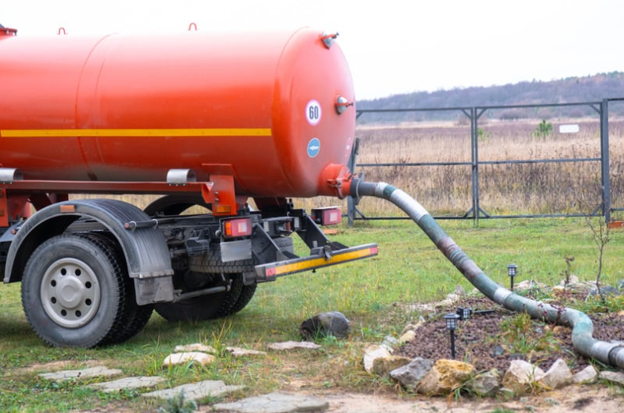
A Pump-Out
Most households fall in a 3-to-5 year pumping range. Short-term rentals are not most households.
If you can’t remember the last pump-out, it’s probably time. Even if you do remember, a busy rental usually needs more frequent service than a regular home, and going into summer with a freshly pumped tank gives you the most working capacity for the months when you’ll need it.
An Inspection
This is where you find out what shape the rest of the system is in.
A tech checks:
- Tank levels
- Visible condition where access allows
- Filters and baffles
- For restricted flow or backup
- The drain field for saturation
For rentals, an inspection is the part of septic system maintenance in Sonoma County where you find out whether the system is realistically keeping up with how the property is being used.
Safety note: Don’t open the tank yourself. The gases inside can be dangerous, and septic work needs the right equipment.
Setting Up the House So Guests Don’t Wreck the System
You can’t follow guests around with a clipboard. But you can set things up, so guests are aware of what to put down the drain.
Put up signs that don’t sound preachy
A small, friendly note in each bathroom is plenty:
“Heads up — this house is on a septic system. Please only flush toilet paper. No wipes (even the flushable kind), no paper towels, no feminine products. Trash cans are right there. Thanks!”
In the kitchen:
“No grease, oil, or coffee grounds down the sink, please. Compost bin under the counter, trash next to it.”
Most guests will go along with it. The ones who won’t will at least see the sign before they cause a problem.
Stock the Right Supplies
- Septic-safe toilet paper. The thinner stuff breaks down better
- A trash can with liners in every bathroom
- A grease can or jar by the stove, clearly labeled
- A drain strainer in every sink and shower
Skip the Additives
The bacteria in a healthy tank do the work on their own, and most additives don’t improve anything. A few of them actually mess with how well the tank operates. Pumping and not abusing the system are what matters most.
Making It Through a Busy Summer Without an Emergency Call
Even with everything set up right, a few habits between guests will keep you in good shape.
Stagger Your Laundry
If your turnover crew runs sheets and towels between every booking, that’s a lot of water hitting the system in a short window. Spread it out where you can. Two loads now, two loads later, instead of five loads back-to-back.
Keep an Eye on the Drain Field
Walk it every couple of weeks during the season. Look for soft spots, standing water, smells, oddly green grass. If it changes from one walk to the next, that’s worth a call.
Watch the Hot Tub
If you have one, hot tub water doesn’t belong in the septic system. Drain it out somewhere else on the property where it won’t pool over the drain field.
Keep Weight Off the Drain Field
No parking on it, no pop-up tents staked into it, no kiddie pools draining onto it. If guests are using your yard, the drain field area is the part you want to keep clear.
Local Notes for Sonoma County Rentals
Our soils around here vary a lot. West county is heavy clay in places. Closer to the river you’ve got sandier ground but a high water table. Up in the hills you’ve got slope and bedrock to deal with.
All of that affects how a drain field handles a heavy summer.
Properties that flooded or had drain field issues during a wet winter are especially worth checking before summer.
Saturated soil from January doesn’t always recover the way you’d think, and a drain field that limped through spring isn’t going to magically handle a packed July.
If your place is in a low-lying area or near a creek, or if it’s been on the same system for decades without an upgrade, an inspection might surface options worth knowing about. Pre-treatment systems can take a lot of pressure off an older drain field.
What to Do Next
- Walk the property
- Check the drain field area
- Look for slow drains, smells, soft spots
- Find your last pump-out record
- Schedule a pre-season pump-out and inspection Get on the calendar before May if you can. Septic crews around here book up once summer hits.
- Set up the house for guests
- Septic-safe toilet paper
- Bathroom signs
- Trash cans with liners
- Drain strainers in sinks and showers
- A grease jar by the stove
Safety note: Don’t try to inspect or open the tank yourself. Leave that to the techs with the right gear.
Ready to Schedule Maintenance?
L.J. Construction has served Sebastopol and Sonoma County since 1966. We’re family owned, licensed and insured, and we handle short-term rental systems routinely. We’ll inspect first, tell you what we find, and give you a straight answer about what the system needs going into summer. No pressure.
Call L.J. Construction at (707) 823-0247, or contact us online to schedule maintenance and an inspection.
Frequently Asked Questions
How often should I pump the septic at a short-term rental?
More often than a regular home, usually. The 3-to-5 year range is for normal household use. Rentals see a lot more people and water, so a yearly pump-out before the busy season is pretty common. An inspection can confirm what’s right for your property.
What if I have a problem mid-season with guests in the house?
Call our team. We run 24-hour emergency service. Mid-season emergency work is more expensive and more disruptive than pre-season maintenance, which is why a spring inspection is worth doing.
Do you handle drain field repairs and pre-treatment system installations too?
Yes. We do design, installation, repair, and maintenance across Sonoma County and the surrounding area, including pre-treatment systems for properties that need to take some load off the drain field.

President / Owner, L J Construction
LJ Construction is a family owned and operated business that was founded in 1966. We provide full-service septic tank repair, installation and maintenance. With years of experience in commercial and residential projects, our goal is to find a solution to all of your system issues. We adhere to the highest industry standards.
Our reputation is built on our name and we are proud to say LJ Construction offers more than integrity alone, we offer effective results. LJ Construction is licensed and insured and we look forward to serving you!