If your septic system is starting to act up, or you’re building on rural ground and the county has questions about your soil, you’ve probably heard the phrase “pre-treatment.” It’s a common recommendation across the region.
The ground under many Sonoma County properties makes conventional systems a tough fit, and how a system gets maintained matters just as much as how it gets installed. This piece breaks down when a pre treatment septic system in Sonoma County becomes the practical answer, why the site drives the decision, and how the right setup gets chosen through inspection and testing.
Key Takeaways
- Pre-treatment cleans wastewater before it reaches the drain field, which reduces stress on the soil.
- Sonoma County soils, groundwater, and terrain limit conventional drain fields on many properties.
- Higher water use often pushes aging systems past their original design.
- Soil testing and site evaluation decide the right system, not guesswork.
- Pre-treatment units have moving parts that need regular service to keep working properly.
What is a Pre Treatment Septic System?
A conventional septic system holds waste in a tank, lets solids settle, and sends the liquid to a drain field where soil filters it before it reaches groundwater. A pre-treatment system adds a step between the tank and the drain field. Wastewater passes through a treatment unit, often a media-based filter such as the AdvanTex Treatment System, and comes out much cleaner before hitting the soil.
Cleaner effluent is easier on the drain field. It puts less strain on the soil, works better in tight ground, and helps the drain field last longer before it needs repair or replacement.
The main parts:
- Septic tank: solids settle here.
- Treatment unit: an aerobic or media-based stage that reduces contaminants.
- Dispersal field: the drain field or drip system that finishes treatment in the soil.
- Controls and alarms: monitor pump cycles and flag issues.
Four Site Conditions That Share Which System a Property Needs
Sonoma County properties are all over the map when it comes to soil and terrain. Two neighbors on the same road can have completely different septic conditions. The site itself decides what kind of system will work.
Heavy Clay and Slow-Draining Ground
Much of the county sits on soils with a high clay fraction. Clay holds water and drains slowly. When a conventional drain field goes into clay, effluent has nowhere to move quickly, and the soil around the trenches stays saturated. Over time that leads to:
- Surfacing
- Odor
- Drain field failure
Pre-treatment produces cleaner effluent that’s easier on marginal soils, and pressurized dispersal spreads the load more evenly than gravity trenches.
High Groundwater and Seasonal Saturation
Winter rains raise the water table across the county, and low-lying parcels near creeks, wetlands, and the Russian River corridor can sit wet for months. A conventional drain field needs unsaturated soil below the trenches to work correctly.
When groundwater rises into that zone, treatment stops happening the way it should. These sites often need shallow drip dispersal or a pre-treatment unit that can handle wet-season loading.
Hillsides, Slopes, and Tight Lots
Steep ground is common across the county, from the coastal hills to the interior ridges. Slopes limit:
- Where a drain field can go
- How big it can be
- How effluent moves once it’s in the ground
Small urban and semi-rural lots run into a version of the same problem: not enough usable area for a conventional field.
A pre treatment septic system in Sonoma County allows a smaller, more forgiving dispersal field, which opens up sites that would otherwise be a dead end.
When the Household Outgrows the Site
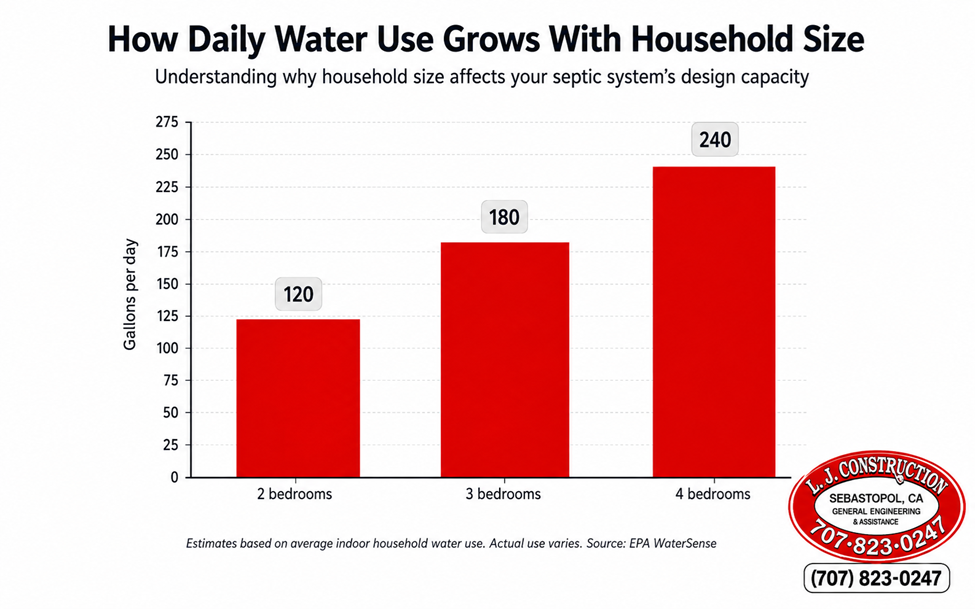
Systems get sized for a certain design flow, based on bedroom count and expected use. Add a remodel, an ADU, a home office with visitors, or a bigger family, and daily wastewater volume climbs.
Higher use on an aging conventional system is often what tips the balance toward pre-treatment. The site was fine for the original build; the numbers changed.
Pre Treatment Systems Require Routine Maintenance
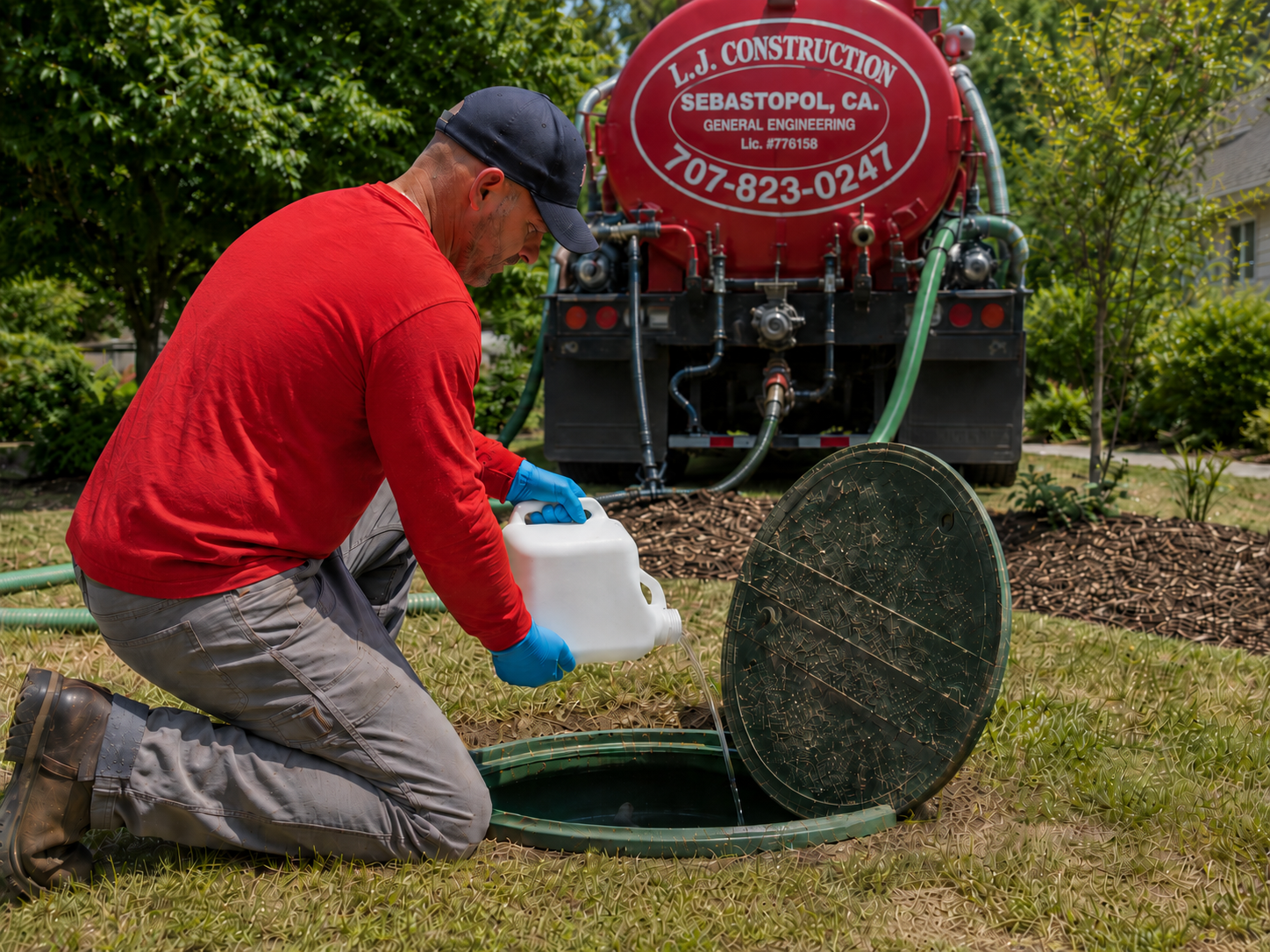
A pre-treatment unit has moving parts. Pumps, filters, aerators, and controls all keep the system running well, and they need periodic attention. That’s the tradeoff for the extra performance. Skipping service on an AdvanTex or similar unit is what turns a well-designed system into an expensive repair.
Here’s the simple way to think about it: the treatment unit protects the drain field, and maintenance protects the treatment unit.
If you can’t remember the last pump-out on your septic tank, or the last time anyone opened the control panel on your treatment unit, it’s probably time.
Safety note: Do not open a septic tank yourself. Tanks contain dangerous gases and should only be handled by licensed professionals.
Selecting the Right System: Soil Testing, Site Evaluation, and No Guesswork
There’s no guessing on a good design. The right system comes from what the site itself can support.
The process usually includes:
- A soil evaluation. Test pits and percolation tests show what the ground can handle.
- A site survey. Setbacks from wells, waterways, structures, and property lines shape where the system can go.
- Design flow calculations. Based on bedrooms, fixtures, and expected water use.
- County review and permitting. Permit Sonoma sets the standards a system has to meet.
- System selection. Conventional, pre-treatment, drip dispersal, mound, or a combination, depending on what the site allows.
A trusted septic contractor will inspect it first, then walk you through your options.
Signs Your Property May Need a Pre Treatment System
Any of these are worth a professional look:
- Slow drains, odors, or soggy spots near the drain field
- Heavy clay soils, a parcel near a creek, or a hillside site
- A house built before current septic standards
- Bedrooms being added, an ADU going in, or higher water use overall
- The county flagged your site during a permit review or property transfer
An inspection can confirm whether a pre treatment septic system in Sonoma County fits your property, or whether a repair on the existing setup will hold.
Find Out if You Site Need a Pre Treatment Septic System
L.J. Construction has been installing, repairing, and maintaining septic systems across Sonoma County since 1966. That includes conventional systems, aerobic treatment units, drip dispersal, and pre-treatment installs on sites that turned out to be far from simple.
- Family owned and operated since 1966
- Licensed and insured
- 24-hour emergency service
- Handles design, permitting, installation, and ongoing maintenance
- Works on both residential and commercial systems
- Approach: inspect first, explain options, no pressure
The goal on every job is high quality work at the best value, with the least disruption to the property. We’ll walk you through your options without pressure.
Contact us online or call L.J. Construction at (707) 823-0274 to schedule your site evaluation today.
Frequently Asked Questions
When is pre-treatment recommended in Sonoma County?
Sites with heavy clay, high groundwater, steep slopes, small lots, or higher-than-average water use are often candidates. A soil evaluation and county review confirm what a specific property needs.
How is a pre-treatment unit maintained?
The treatment unit has pumps, filters, and controls that need periodic service. Regular inspections catch small issues before they become failures. Homeowners should never open a septic tank themselves. Tanks contain dangerous gases.
Can a conventional septic system be upgraded to pre-treatment?
Often yes, depending on the site and the condition of the existing tank and drain field. An inspection can confirm what’s possible on your property.
Is AdvanTex the only pre-treatment option?
No. AdvanTex is one of the systems L.J. Construction installs, along with other aerobic treatment units and drip dispersal setups. The right choice depends on the site.

President / Owner, L J Construction
LJ Construction is a family owned and operated business that was founded in 1966. We provide full-service septic tank repair, installation and maintenance. With years of experience in commercial and residential projects, our goal is to find a solution to all of your system issues. We adhere to the highest industry standards.
Our reputation is built on our name and we are proud to say LJ Construction offers more than integrity alone, we offer effective results. LJ Construction is licensed and insured and we look forward to serving you!