
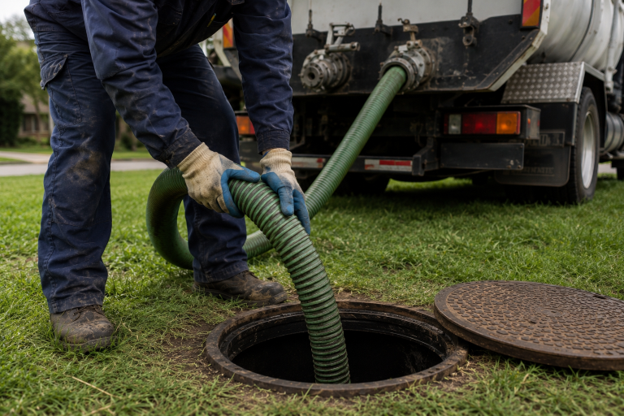
If your property runs on a pre-treatment septic system, it treats wastewater before it reaches the drain field. That extra treatment stage matters, especially on properties with tight soil or limited drain field space. It also means the system needs more attention than a conventional tank.
A pre treatment septic system in Sonoma County works harder than a conventional one. It cleans wastewater before it reaches the drain field, using extra filtration and, in most designs, air and biological media. That extra treatment protects your soil and your groundwater. It also means more moving parts, and more reasons to keep the system on a schedule.
This guide covers what real ongoing care looks like, what a service visit includes, the habits that keep your system healthy, and the warning signs worth a phone call.
Key Takeaways
- Pre-treatment systems typically need 1 to 2 professional service visits per year, depending on the model.
- Pumps, control panels, filters, and aerators wear over time and need trained eyes on them.
- Household habits protect (or damage) the system more than most owners realize.
- A slow drain, a blinking alarm, or a new odor means it’s time to call.
- Never open a septic tank yourself; the gases inside are dangerous.
- L.J. Construction has served Sonoma County since 1966.
Why Pre-Treatment Systems Require Regular Maintenance
A conventional septic tank has one job: settle solids and pass liquid to a drain field. A pre-treatment system, whether it’s an AdvanTex, a Nayadic, or a Whitewater unit, adds an active treatment stage. That means components that run on power, cycle on and off, and process waste with living bacteria.
Those components wear over time.
- Pumps have motors that cycle on and off dozens of times a day.
- Filter media collects fine solids with every dose of wastewater and eventually needs cleaning or replacement.
- Control panels have relays and sensors that monitor water levels, pump cycles, and system faults.
Alarms exist because these systems are designed to tell you when something’s off before it becomes a bigger problem.
Pre-treatment systems usually give you a warning before they fail. The catch is that someone has to be watching.
What Routine Maintenance Typically Involves
Ongoing care for a pre treatment septic system in Sonoma County falls into a few main parts. Your specific system may need more or less of each.
Scheduled professional service. Most manufacturers require inspection and service on a set schedule. Skipping visits can void the warranty and shorten the system’s life.
Tank pumping. The primary tank fills with solids. Every 3 to 5 years is typical for most households, though heavy use, garbage disposals, and larger families shorten that interval.
Component checks. Pumps, floats, control panels, aerators, and filters all need periodic testing. Small problems caught early stay small.
Effluent quality checks. Some systems and jurisdictions require sampling to confirm the treated wastewater meets discharge standards.
Recordkeeping. Sonoma County health authorities may ask for service records when you sell the home or apply for a permit. Keep them.
What to Expect During a Service Visit
Every provider’s checklist looks a little different. A typical visit from a licensed septic professional covers:
- A walk-around of the tank lids, control panel, and drain field
- Reading the control panel and checking the alarm history
- Testing the pump, floats, and any aerator or blower
- Cleaning or replacing filter media as needed
- Inspecting baffles, tees, and inlet and outlet connections
- Checking sludge and scum levels in the primary tank
- Sampling effluent when required by the system or the county
- A written report and any recommended follow-up
Heads up: Never lift a septic lid on your own to peek inside. The gases inside a tank can knock a person out in seconds. Leave the lids to a trained technician.
Everyday Habits That Protect Your System
Your daily habits change how hard the treatment stage has to work. A few practical rules:
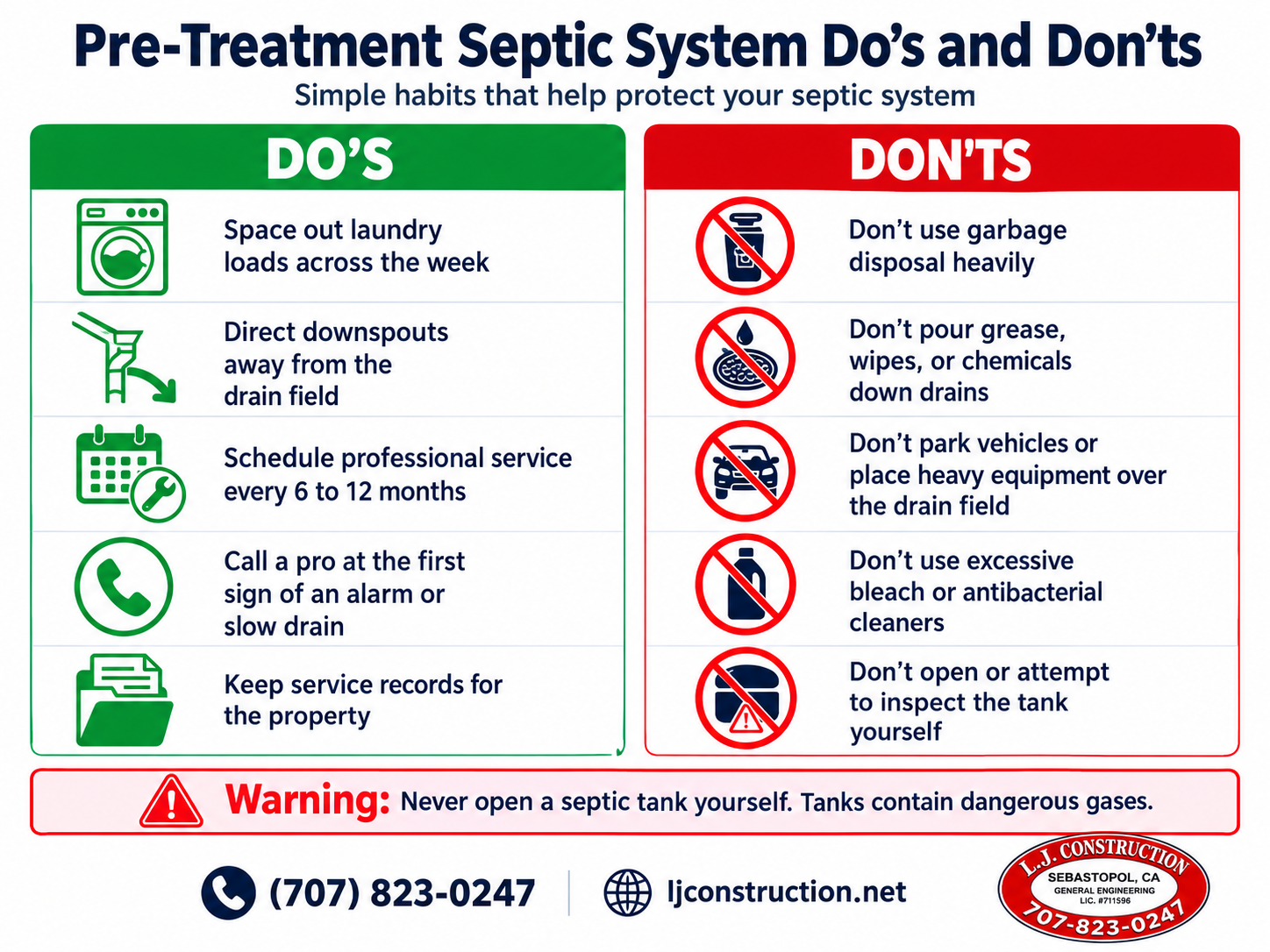
- Space out laundry loads across the week instead of running 5 in one day.
- Skip the garbage disposal or use it lightly; food waste feeds solids buildup.
- Keep grease, wipes, cat litter, paper towels, and coffee grounds out of the drains.
- Go easy on bleach, drain cleaners, and antibacterial soaps; they kill the bacteria your system needs.
- Watch for slow drains anywhere in the house, not just one fixture.
- Keep vehicles, livestock, and heavy landscaping off the drain field.
- Direct downspouts and irrigation away from the drain field so it doesn’t stay saturated.
If you can’t remember the last pump-out, it’s probably time to schedule one.
Signs It’s Time to Call a Professional
An inspection can confirm what’s happening inside the system. The signs below almost always warrant a professional look:
- The control panel alarm is on or has been going off intermittently.
- Sewage odor inside or outside near the tank or drain field.
- Slow drains in more than one fixture at the same time.
- Gurgling from toilets or sinks.
- Soggy ground, greener grass, or standing water over the drain field.
- Sewage backups into the house.
- You’ve owned the property for more than 3 years without a service visit.
Let’s inspect it first, then talk options. A quick look is faster and less expensive than waiting for a full system failure.
Why homeowners in Sonoma County call L.J. Construction
L.J. Construction installs and services every kind of pre treatment septic system in Sonoma County: AdvanTex, Nayadic, and Whitewater. The team has worked on Sonoma County properties since 1966 and knows the local soil, terrain, and county requirements. Every job is licensed, insured, and backed by warranties on installation work.
- Family owned and operated since 1966
- 24-hour emergency service
- Inspection charges credited toward the repair when a quick fix won’t resolve the issue
- Low-pressure approach: inspect first, explain options, let you decide
For maintenance, inspections, or system replacements, contact the L.J. Construction team online or call (707) 823-0247 today.

President / Owner, L J Construction
LJ Construction is a family owned and operated business that was founded in 1966. We provide full-service septic tank repair, installation and maintenance. With years of experience in commercial and residential projects, our goal is to find a solution to all of your system issues. We adhere to the highest industry standards.
Our reputation is built on our name and we are proud to say LJ Construction offers more than integrity alone, we offer effective results. LJ Construction is licensed and insured and we look forward to serving you!