Sonoma County properties don’t behave the same way when it comes to septic. A parcel in Sebastopol with heavy clay drains differently than a hillside in Occidental or a low-lying lot near the Laguna. That soil variation is why the choice between a conventional setup and a pre treatment septic system in Sonoma County matters more than most homeowners expect.
Both systems treat household wastewater. They handle the work differently, and they age differently once installed.
Here’s the simple way to think about it. Conventional systems rely on the soil to do most of the treatment work. Pre-treatment systems do more of that work inside the tank before wastewater ever reaches the drain field. Everything else follows from that.
Key Takeaways
- Conventional and pre-treatment systems both handle household wastewater, but they treat it to different levels before it reaches the soil.
- Pre-treatment septic systems often make sense on Sonoma County properties with clay soils, high water tables, sloped lots, or limited drain field space.
- Maintenance schedules and costs differ. Conventional systems need less frequent attention. Pre-treatment systems need routine service visits but tend to protect the drain field longer.
- Sonoma County soils, setbacks, and watershed rules can rule out a conventional system entirely on some parcels.
- The right choice depends on soil, slope, lot size, and county requirements. An inspection is the only reliable way to know.
- Working with a septic contractor who knows local conditions matters more than the brand of system installed.
How a Conventional Septic Systems Work
A conventional septic system has two main parts: a watertight tank and a drain field (also called a leach field).
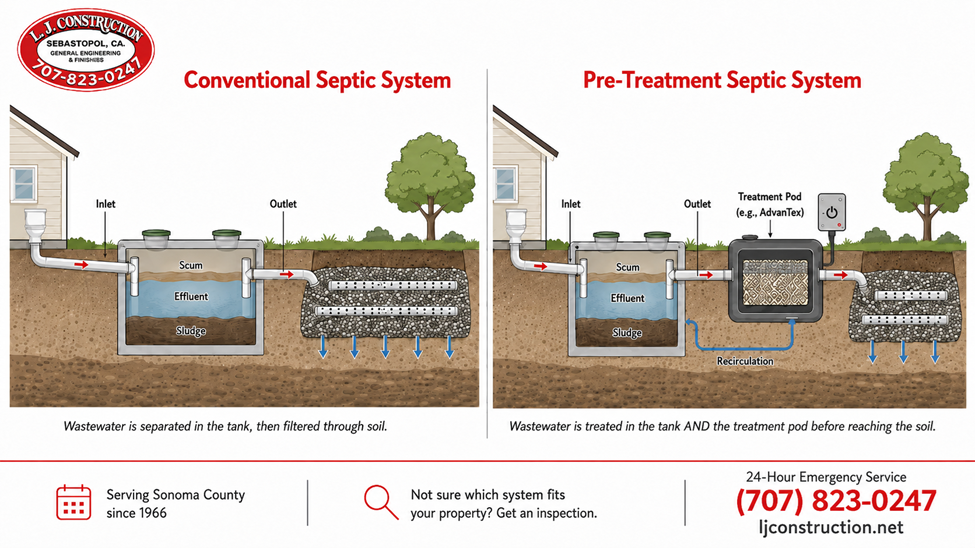
Wastewater from the house flows into the tank, where solids settle to the bottom as sludge and grease floats to the top as scum. The liquid layer in the middle, called effluent, flows out to the drain field. From there, it filters through gravel and soil, which finish treating it before it reaches groundwater.
That’s the whole system. No moving parts. No electricity. Gravity does the work.
Who typically uses one:
- Properties with well-draining soil (loamy or sandy)
- Flat or gently sloped lots with room for a full drain field
- Rural parcels that meet county setback requirements for wells, property lines, and surface water
- Homeowners looking for lower routine maintenance
Core features of a conventional system:
- Concrete tank sized to household use (often 1,000 to 1,500 gallons for a typical home)
- Gravity flow from tank to drain field
- Passive treatment. No pumps, no aerators, no electricity in most cases
- Pump-out typically needed every 3 to 5 years
- Long service life when the soil and site suit it
How a Pre-Treatment Septic Systems Work
A pre-treatment septic system adds a treatment stage between the tank and the drain field. Instead of relying entirely on soil to finish the job, the system uses aerobic bacteria, filters, or textile media to break down waste before it reaches the ground.
The AdvanTex Treatment System (by Orenco Systems), which is a common pre treatment septic system in Sonoma County, uses a textile filter and small pumps to recirculate effluent through a treatment pod. Some setups pair pre-treatment with a GeoFlow drip disposal field for even more control over how treated water enters the soil.
Since the wastewater is cleaner by the time it reaches the drain field, the soil doesn’t have to work as hard. That’s why pre-treatment systems tend to extend drain field life and make marginal sites usable.
Who typically uses one:
- Properties with clay-heavy or slow-draining soil
- Low-lying lots or high water tables
- Sloped hillside parcels where a conventional field won’t fit
- Small lots without room for a full leach field
- Properties near creeks, wells, or environmentally sensitive areas
- Commercial or higher-use residential properties
Core features:
- Advanced treatment stage before the drain field
- Uses electricity for pumps, aerators, or recirculation
- Cleaner effluent, which reduces stress on the soil
- Requires scheduled professional service visits (typically once or twice a year)
- Often the only permitted option on difficult sites
Comparing the two Systems Head-to-Head
Once both systems are on the table, the differences fall into a few clear categories. Purpose, cost, power needs, maintenance, and site fit.
Purpose
- A conventional system separates solids from liquid and hands the rest of the job to the soil.
- A pre-treatment system does much of the biological treatment inside the tank first, so the drain field receives cleaner water.
Upfront Cost
- Conventional systems are typically less expensive to install because they have fewer components and no electrical work.
- Pre-treatment systems cost more upfront because of the added treatment pod, pumps, control panels, and monitoring equipment.
Long-Term Drain Field Wear
This is where the math often shifts. Drain fields are the most expensive part of any septic system to replace. Since pre-treatment systems send cleaner effluent into the ground, the drain field is under less strain and tends to last longer.
On a marginal site, that difference is significant.
Power and Monitoring
- Conventional systems typically run on gravity alone with no electrical components.
- Pre-treatment systems require power for pumps and controls, and most have alarms that flag issues early.
Routine Maintenance
- Conventional systems need a pump-out every 3 to 5 years and periodic inspection.
- Pre-treatment systems need pump-outs on a similar cycle plus scheduled service visits once or twice a year to check pumps, filters, and controls.
Site fit in Sonoma County
- Conventional systems suit parcels with good soil, adequate space, and no regulatory constraints.
- Pre-treatment systems suit parcels with clay soil, high groundwater, slope, small lot size, or sensitive watershed proximity.
Some Sonoma County sites are only permitted for advanced treatment.
Environmental Impact
Both systems, properly installed and maintained, meet public health standards. Pre-treatment systems produce cleaner effluent, which matters more on properties near wells, creeks, or drinking water sources.
The important takeaway: the higher upfront cost of a pre-treatment system often makes sense on Sonoma County properties where a conventional drain field would fail early or wouldn’t be permitted at all.
The Same Septic System Doesn’t Work on Every Property
Sonoma County soils change block by block. Slope, groundwater depth, and proximity to creeks and wells all shape what’s possible on a given lot.
The regulatory side adds another layer. Permits go through Sonoma County Environmental Health, which enforces setbacks from wells, waterways, and property lines. Parcels near sensitive watersheds, in nitrate-priority areas, or with shallow groundwater often require advanced treatment. On some sites, a conventional system isn’t legally permitted regardless of lot size.
A few local factors that push toward a pre-treatment septic system in Sonoma County:
- Clay-heavy soil that percolates too slowly
- Shallow bedrock or seasonally high water tables
- Sloped lots where effluent could surface downhill
- Properties near the Russian River, Laguna de Santa Rosa, or coastal creeks
- Rural parcels with wells close to proposed drain field locations
- Older homes where the original drain field is failing and space for replacement is limited
Why Site Conditions Drive the System Choice
Picking the wrong system isn’t a small mistake. A conventional drain field installed on unsuitable soil can fail within a few years, which means:
- Saturated ground
- Backups into the house
- Expensive replacement work
On sensitive parcels, an underperforming system can also contaminate a well or nearby waterway.
A properly matched system does the opposite.
- It handles daily use quietly
- Protects groundwater
- Meets county requirements at inspection or sale
- Lasts decades with regular maintenance
That’s why the decision comes down to matching the system to the site, not to picking whichever one seems simpler or cheaper on paper.
Even The Right System Can Hit Trouble
Emergencies still happen even with the right system.
- Slow drains across multiple fixtures
- Gurgling toilets
- Sewage odors
- Soggy ground near the tank or field
If you can smell sewage or see standing water, don’t wait. L.J. Construction runs a 24-hour emergency line for exactly these types of situations.
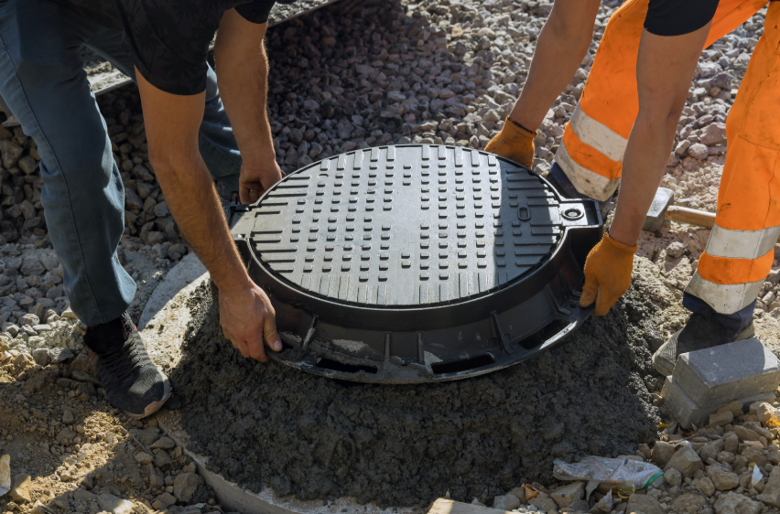
Safety note: never open a septic tank yourself. Tanks contain toxic gases that can knock a person unconscious in seconds. All inspection and pumping work should be handled by a licensed professional with the proper equipment.
Which Septic System Fits Your Property?
Choose a Conventional Septic System If:
- Your soil percolates well (typically loam or sandy loam)
- Your lot has enough space for a full drain field with required setbacks
- Groundwater on your property sits well below the drain field depth
- Your property is not in a nitrate-priority or sensitive watershed area
- You want lower routine maintenance and no electrical components
- A licensed contractor and county inspector confirm your site is suitable
Choose a Pre-Treatment Septic System If:
- Your soil is clay-heavy, rocky, or drains too slowly
- Your lot is small or has limited drain field space
- Your property has slope, high groundwater, or is near a creek or well
- Your existing system is aging and the original drain field is failing
- County requirements for your parcel call for advanced treatment
- You want to extend drain field life and reduce long-term risk
If you’re between the two, the answer is the same either way. Let’s inspect it first, then talk options.
Maintenance: What to Expect from Each System
Maintenance is where the two systems really separate. Both need attention, but the schedules and tasks look different.
Conventional System Maintenance
- Pump-out every 3 to 5 years depending on tank size and household use. Larger homes and heavy water use push toward the shorter end.
- Annual visual inspection of the tank lids, drain field area, and any surface signs (soggy ground, odors, grass differences).
- Filter and baffle checks if the tank has an effluent filter. These trap solids that would otherwise reach the drain field.
- Watch for warning signs between visits: slow drains, gurgling, odors, or soggy ground.
- Keep records of every pump-out and inspection. If you can’t remember the last pump-out, it’s probably time.
Pre-Treatment System Maintenance
- Scheduled service visits, typically 1 to 2 times per year, to check pumps, aerators, filters, and control panels. Some systems have monitoring alarms that flag issues sooner.
- Filter or media replacement on the recommended cycle for the specific system installed. AdvanTex, Nayadic, Whitewater, and similar systems each have their own service intervals.
- Pump-out of the tank still needed periodically, often on a similar 3 to 5 year cycle depending on use.
- Electrical check of pumps and control panels, since these components run continuously.
- Response to alarms immediately if a control panel indicates a fault. Pre-treatment systems can back up if a pump fails and isn’t caught quickly.
A pre-treatment system needs more routine attention, but that attention protects the drain field, which is the expensive part of any septic system to replace. Regular maintenance on either system prevents small issues from turning into emergency calls.
Safety Note: Never attempt DIY inspection or pumping on either system. Beyond the toxic gas risk, opening a tank without proper equipment can damage components, contaminate the site, and void warranties. All maintenance should go through a licensed septic contractor.
Why Local Experience Matters
Every septic system in Sonoma County has to work with the specific soil, slope, water table, and county rules of that parcel.
L.J. Construction has been installing and servicing septic systems across Sebastopol, Santa Rosa, Forestville, and surrounding coastal areas since 1966. That includes conventional systems, AdvanTex pre-treatment systems, Nayadic and Whitewater ATUs, GeoFlow drip disposal fields, and concrete tank installations. Local experience shapes:
- Accurate site assessment for soil type and drainage
- Familiarity with Sonoma County Environmental Health permit requirements
- Proper system sizing for the household or commercial use
- Installation that respects setbacks, slope, and future serviceability
- Warranty-backed workmanship and clear maintenance records
Whether you’re planning a new installation, replacing an aging system, or trying to sort out which type of pre treatment septic system in Sonoma County fits your parcel, an on-site inspection is the best first step.
Contact us online or call L.J. Construction at (707) 823- 0247 to schedule service today.
Frequently Asked Questions
Are pre-treatment systems worth the extra maintenance?
On a property where a conventional system would fail early or wouldn’t be permitted at all, yes. Pre-treatment systems make marginal sites usable, produce cleaner effluent, and extend drain field life. On a well-suited site with good soil and plenty of space, a conventional system may serve the property just as well.
How long does each type of septic system last?
Both types can last decades when properly installed and maintained. Conventional systems often serve 25 to 40 years or more on suitable sites.
Pre-treatment systems can match or exceed that, especially when the pre-treatment stage protects the drain field from premature failure. Actual lifespan depends on site conditions, household use, and consistent maintenance.
What happens if I install the wrong type of system?
An undersized or poorly matched conventional system on unsuitable soil can fail within a few years, leading to backups, saturated ground, and expensive drain field replacement.
That’s why site assessment and permit review come before any installation decision.

President / Owner, L J Construction
LJ Construction is a family owned and operated business that was founded in 1966. We provide full-service septic tank repair, installation and maintenance. With years of experience in commercial and residential projects, our goal is to find a solution to all of your system issues. We adhere to the highest industry standards.
Our reputation is built on our name and we are proud to say LJ Construction offers more than integrity alone, we offer effective results. LJ Construction is licensed and insured and we look forward to serving you!